

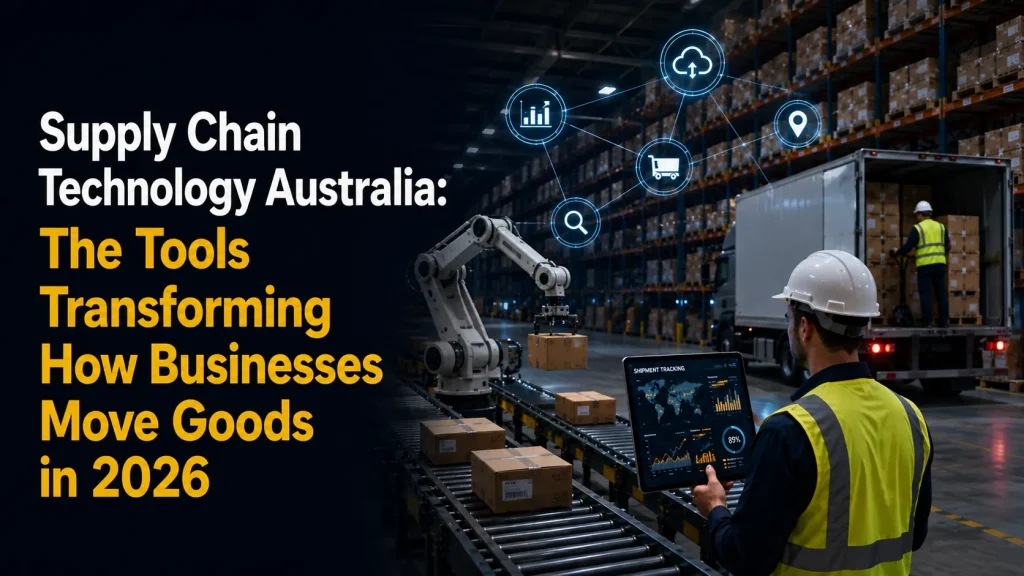
Supply Chain Technology Australia: The Tools Transforming How Businesses Move Goods in 2026
Written by the FR8WISE Supply Chain Team | FR8WISE is a Sydney-based supply chain consultancy working with Australian businesses across...
We’re here to answer any question you may have.
Would you like to join our growing team?
careers@fr8wise.com
Have a project in mind? Send a message.
info@fr8wise.com
Level 2, 88 George Street
The Rocks NSW 2000
We are here to answer any question you may have. Feel free to reach via contact form.
An engineering supply chain in Australia depends on getting specific parts, in specific quantities, to a specific schedule. Custom components, certified materials and one-off fabrications leave little room for substitution. FR8WISE helps engineering firms plan procurement, customs and freight so that project timelines are not held hostage by a missing item.
Specifications drive everything. Engineering buyers often order to drawings, with defined materials, tolerances and certification. That narrows the supplier pool and makes lead times longer and less flexible than for off-the-shelf goods.
Documentation is the next problem. Customs classification for engineered parts depends on what the item is and what it does, which is not always obvious from a drawing or a part number. A vague description can lead to the wrong code, queries from the Australian Border Force and delays.
Cost structure is the third. Duty may be reduced by free trade agreements or by a Tariff Concession Order, but only where the goods and paperwork qualify. Anti-dumping duties can apply to certain steel and fabricated products.
Project timing completes the picture. Engineering firms often work to client milestones, so a late shipment from overseas can trigger penalties or rework. Sea freight is cheaper, but air freight sometimes protects the programme.
Our Smart Procurement Strategies compare overseas and local fabricators on landed cost, lead time and risk, then map delivery against your project schedule. We also review supplier terms, including Incoterms and payment milestones, so the commercial arrangement matches your exposure.
Our Import Customs Compliance Analysis checks classification, valuation and duty treatment for engineered goods, and looks at whether a Tariff Concession Order or free trade agreement could apply.
Our Mastery in Supply Chain & Logistics programme suits project engineers and procurement officers who need to understand how freight and customs decisions affect cost and time.
Classification is based on the item’s nature, material and function. Provide drawings, specifications and a plain-language description to your customs broker. Where the result is uncertain, you can seek tariff advice from the ABF.
A TCO lets eligible goods enter at a reduced or nil duty rate where no Australian-made equivalent exists. Not all goods qualify, so check whether a TCO covers your item before you rely on it.
When a missed milestone costs more than the freight premium, yes. Compare the full cost of delay against the air freight cost before deciding.
If you are scoping a major component order or reviewing how your team buys overseas, we can help structure the plan. See also our work in machinery supply chains, or speak to our Sydney team about your engineering supply chain.
Stay ahead with our latest insights on achieving clarity, certainty, and results-driven impact for your supply chain.
Adding {{itemName}} to cart
Added {{itemName}} to cart