

Everything Australian Businesses Need to Move Manage and Master Their Supply Chain
Written by the FR8WISE Supply Chain Team | FR8WISE is a Sydney-based logistics and supply chain consultancy delivering end-to-end FR8...
We’re here to answer any question you may have.
Would you like to join our growing team?
careers@fr8wise.com
Have a project in mind? Send a message.
info@fr8wise.com
Level 2, 88 George Street
The Rocks NSW 2000
We are here to answer any question you may have. Feel free to reach via contact form.
Food and beverage logistics in Australia runs on temperature control, tight shelf lives and a compliance load that grows with every new product line. For importers bringing in specialty ingredients and exporters shipping premium Australian produce, one missed document can mean spoiled stock or rejected cargo. FR8WISE helps food businesses plan the whole route, not just the freight leg.
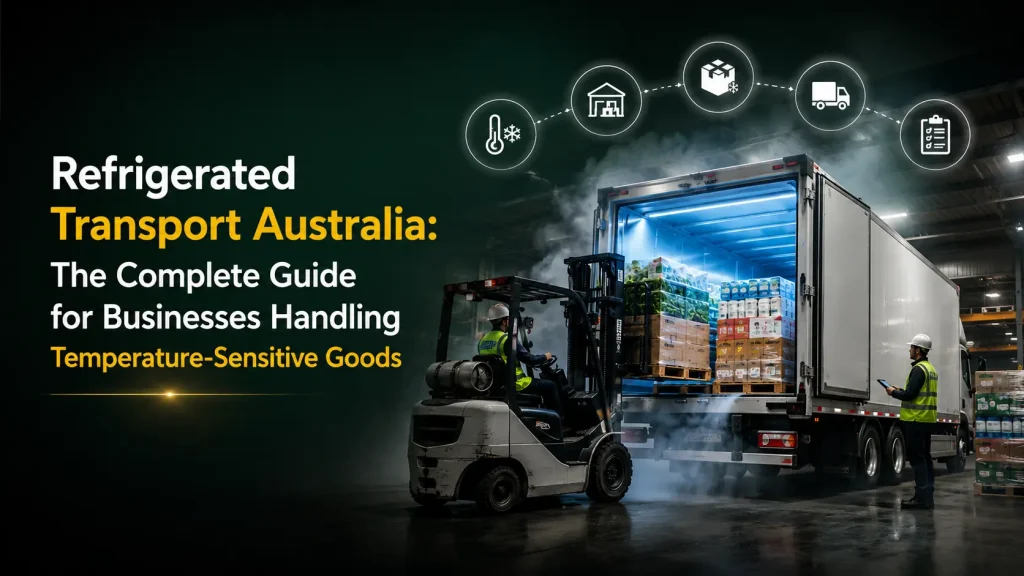
Cold chain integrity is the biggest risk. Chilled and frozen goods rely on correct reefer settings, unbroken temperature records and fast handling at the port. A delay at Port Botany or Melbourne that leaves cargo outside a controlled environment can put an entire container at risk.
Regulation is the second. Imported food is subject to the Imported Food Inspection Scheme, and products must meet the Food Standards Code set by FSANZ, including labelling and country of origin requirements. Biosecurity conditions from DAFF apply to many meat, dairy, egg and plant-based ingredients.
Beverages bring their own issues. Alcohol brings duty and wine equalisation tax considerations, while heavy, fragile pallets of bottles need careful load planning. Retailers then expect on-time, in-full delivery with little tolerance for gaps.
Our Import Customs Compliance Analysis checks tariff classification, origin documentation and duty treatment before goods ship. For food, small classification differences can change both the duty rate and the inspection pathway, so getting it right early protects your margin.
Smart Procurement Strategies help you weigh suppliers on total landed cost, shelf life remaining on arrival and Incoterms, rather than ex-works price alone. We also look at consolidation and shipping frequency to match your stock turns.
Through Mastery in Supply Chain & Logistics, your operations team can learn how freight, customs and inventory decisions connect. Our wider supply chain optimisation work covers transport, warehousing and strategic inventory planning.
Not every consignment. The Imported Food Inspection Scheme categorises foods by risk and refers some consignments for inspection. Higher-risk foods are inspected more often, and biosecurity checks may apply separately.
Imported food must comply with the FSANZ Food Standards Code, including ingredient declarations, allergen statements and country of origin labelling. Check labels before shipping, because relabelling after arrival is costly.
Agree set-point temperatures in writing, use data loggers, and brief your port and delivery partners before arrival. Plan the final delivery slot so product does not wait on a dock.
Whether you are bringing in your first container of specialty ingredients or restructuring a multi-product import programme, we can help. If you source raw produce, see our work in agriculture logistics, or speak to our Sydney team about your food and beverage supply chain.
Stay ahead with our latest insights on achieving clarity, certainty, and results-driven impact for your supply chain.
Adding {{itemName}} to cart
Added {{itemName}} to cart