

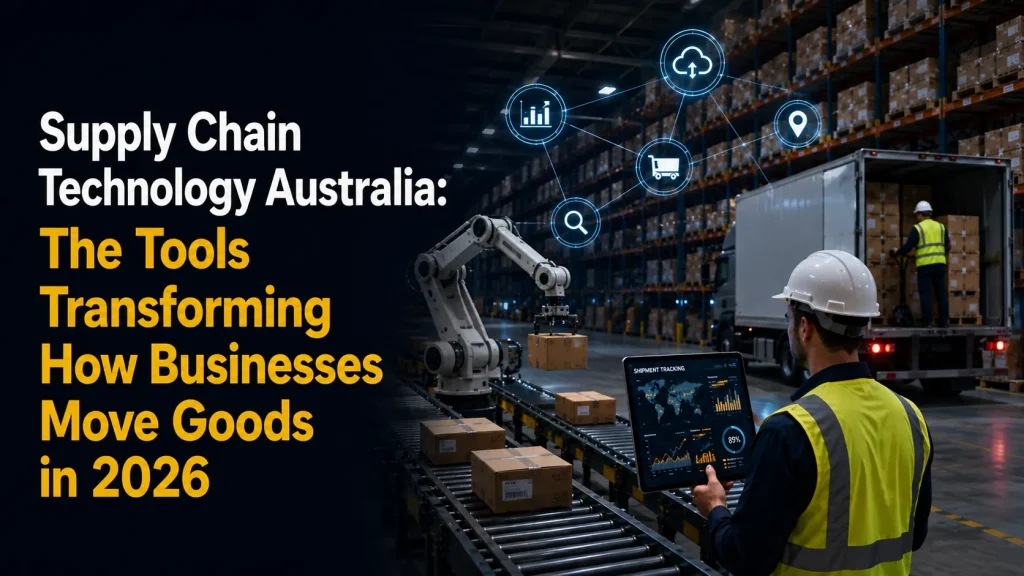
Supply Chain Technology Australia: The Tools Transforming How Businesses Move Goods in 2026
Written by the FR8WISE Supply Chain Team | FR8WISE is a Sydney-based supply chain consultancy working with Australian businesses across...
We’re here to answer any question you may have.
Would you like to join our growing team?
careers@fr8wise.com
Have a project in mind? Send a message.
info@fr8wise.com
Level 2, 88 George Street
The Rocks NSW 2000
We are here to answer any question you may have. Feel free to reach via contact form.
Machinery logistics in Australia involves heavy equipment, specific delivery requirements and customers who need machines working, not waiting. For dealers, distributors and end users, the supply chain extends beyond the machine to manuals, spare parts and commissioning. FR8WISE helps machinery importers plan the whole path from factory to workshop floor.
Handling is the first challenge. Machines are heavy, awkward and valuable, and they often need specialised lifting, lashing and transport. Some are shipped on flat racks or as break-bulk cargo, and each option has cost and schedule consequences.
Biosecurity is the second. Used machinery is a common source of soil and seed contamination, and DAFF inspects used equipment carefully. A dirty machine can be held for cleaning, delaying delivery and adding cost.
Compliance is the third. Machinery must meet relevant safety, electrical and work health and safety requirements for Australian use. Documentation such as manuals and declarations needs to be ready, not chased after arrival.
The aftermarket is the fourth. Selling machines creates a commitment to supply spares and service. Dealers who cannot get parts quickly lose customers to those who can.
Our Import Customs Compliance Analysis reviews tariff classification, valuation and origin for machines, attachments and parts. It also looks at whether a Tariff Concession Order or free trade agreement may reduce duty, and at how the machine’s configuration affects classification.
Smart Procurement Strategies compare manufacturers and suppliers on landed cost, lead time and after-sales support. For spares, we help you decide what to hold, what to order on demand and what to air freight.
Mastery in Supply Chain & Logistics trains dealer and operations staff to handle import documentation and freight planning with confidence.
Yes. Machines should arrive free of soil, seeds and plant or animal material. Pressure-clean thoroughly before shipping and keep photographic evidence, as DAFF may inspect on arrival.
By flat rack, open-top container or break-bulk vessel, depending on size and weight. Your forwarder will advise on the suitable option and route.
Check whether a Tariff Concession Order covers the machine or whether an FTA applies to its origin. Both need the right paperwork, so check eligibility before you ship.
If you are importing a new line or improving your spares pipeline, we can help. Our mining industry page covers support for resource-sector buyers, or speak to our Sydney team about your machinery supply chain.
Stay ahead with our latest insights on achieving clarity, certainty, and results-driven impact for your supply chain.
Adding {{itemName}} to cart
Added {{itemName}} to cart